Last updated: 22 April 2026
Why Gibraltar is One of Europe's Best Dolphin Watching Spots
The Strait of Gibraltar is a geographical chokepoint between the Atlantic Ocean and the Mediterranean Sea. Deep, cold Atlantic water flows in along the bottom while warmer Mediterranean water flows out at the surface. This mixing creates one of the most productive marine ecosystems in Europe, sustaining large populations of fish and the marine mammals that follow them.
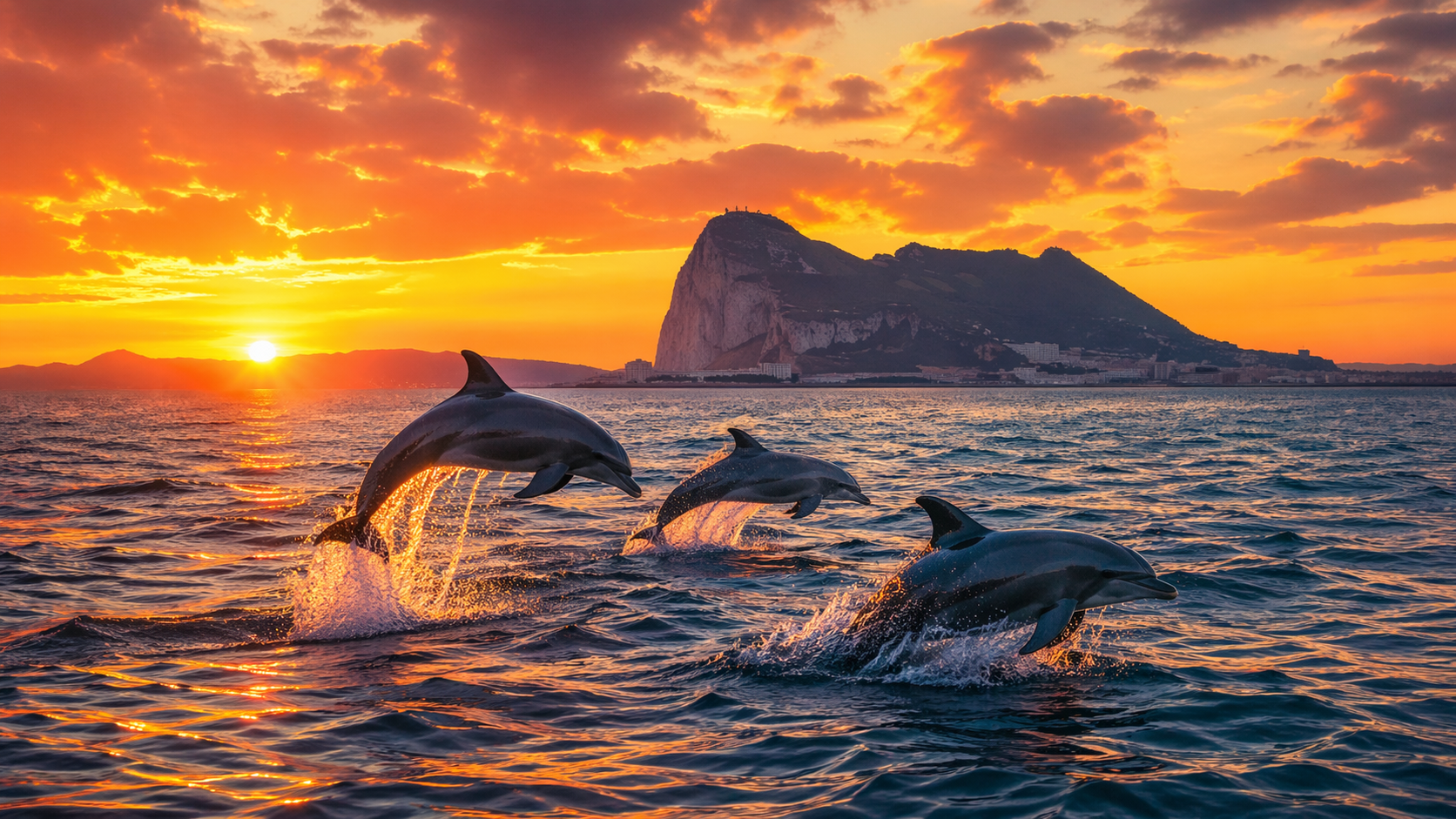
Dolphins have lived in the Strait of Gibraltar year-round for millennia. Unlike seasonal populations found elsewhere, Gibraltar's dolphins are resident, which means they are here in every month of the year. This makes Gibraltar one of the most reliable dolphin watching destinations in Europe. There is no specific narrow window, no need to time your visit precisely, and a very high probability of sighting on any tour.
The Three Resident Dolphin Species
Common Dolphin (Delphinus delphis)
The most frequently seen species in the Strait. Common dolphins are fast, energetic, and highly social, often forming pods of dozens or even hundreds of individuals. They are the species most likely to approach boats and bow-ride, which makes for spectacular viewing. Their distinctive hour-glass pattern on the flanks makes them easy to identify.
Bottlenose Dolphin (Tursiops truncatus)
Larger and more familiar to most people from media and aquariums. Bottlenose dolphins in the Strait tend to form smaller pods and move more slowly than common dolphins. They are resident in the Bay of Gibraltar and are regularly encountered close to shore. Many individuals are known to researchers and can be identified by natural markings on their dorsal fins.
Striped Dolphin (Stenella coeruleoalba)
Less frequently encountered but spectacular when seen. Striped dolphins are highly active, often leaping clear of the water. They tend to favour deeper water further out in the Strait. On tours that venture further from the bay, striped dolphins are an exciting possibility.
Tour Details: What to Expect
| Detail | Typical Spec |
|---|---|
| Duration | 2 to 3 hours |
| Adult price | €25 to €40 |
| Child price | €15 to €25 |
| Departure point | Ocean Village Marina, Gibraltar |
| Best season | April to October (year-round possible) |
| Group size | Varies by operator (12 to 40 typical) |
| Sighting guarantee | None guaranteed, but probability is very high in season |
| Booking | Online or at marina kiosks |
Best Times for Dolphin Watching in Gibraltar
Peak Season: July and August
Summer brings the largest pods. Pods of over 100 common dolphins are regularly reported. The warm weather makes the experience more comfortable, and the long days allow for both morning and afternoon tours. The trade-off is higher prices, fuller boats, and the need to book in advance.
Shoulder Season: April to June and September to October
These months offer excellent dolphin sightings with smaller crowds and more moderate prices. April to June is particularly good because the weather is warming, the water visibility is strong, and the orca season begins. September and October see continued high activity before the quieter winter months.
Winter: November to March
Dolphins are still present year-round, and winter tours do operate. However, weather conditions are less predictable, some operators reduce their schedules, and the experience is different from summer. For dedicated wildlife enthusiasts, a winter tour can offer intimate encounters with smaller pods in calmer conditions.
Morning vs Afternoon Tours
Both have their advantages. Morning tours typically depart between 9am and 11am. The sea is usually calmer in the morning, visibility is often better, and dolphins are frequently more active as they feed after the night. Afternoon tours, departing from around 2pm to 4pm, offer better light for photography and often warmer temperatures.
If seasickness is a concern, choose morning. The Strait can get choppier in the afternoon as daily winds build, particularly in summer.
What to Bring
- Sunscreen: Essential in summer. The sun reflects off the water and burns faster than you expect.
- Seasickness tablets: Take these before boarding if you are prone to motion sickness. The Strait can be choppy.
- Camera: Dolphins move fast. A zoom lens helps. Phone cameras work in calm conditions close to the boat.
- Warm layer: Even in summer, out on the water it can be cooler than expected. A light jacket is useful.
- Water and snacks: Tours do not always provide refreshments. Bring your own water.
Booking Tips
- Book online in advance for summer months. Morning slots fill first.
- Check operator credentials. Reputable operators are licensed and follow responsible wildlife watching guidelines.
- Ask about the boat type. Rigid inflatable boats (RIBs) offer a faster, more thrilling experience but are wetter and rougher. Traditional-style boats are slower but more stable.
- Check the cancellation policy. Tours may be cancelled in bad weather, and a clear cancellation and refund policy protects you.
Frequently Asked Questions
Are dolphin sightings guaranteed on Gibraltar tours?
No operator can guarantee sightings. However, the probability is very high in the spring and summer season. Most operators report sightings on the vast majority of their tours. Some offer a free repeat tour if no dolphins are seen.
Can I swim with dolphins in Gibraltar?
Responsible operators do not allow swimming with wild dolphins, and it is not recommended. The dolphins in the Strait are wild animals and approaching them in the water can stress them and is potentially dangerous. Watching from the boat is the appropriate way to experience them.
Is there a chance of seeing orcas in Gibraltar?
Yes, between April and September. Orcas pass through the Strait following Atlantic bluefin tuna migrations. Several pods are known to researchers and are sighted each year. It is not guaranteed but it is a real possibility, particularly in May, June, and July.
Is the Bay of Gibraltar calm enough for those prone to seasickness?
The Bay of Gibraltar is naturally sheltered from the west, which makes it calmer than the open Strait. Most tours operate partially in the bay, which is more protected. However, if you venture further out into the Strait, conditions can be rougher, particularly in the afternoon. Take tablets before boarding if in doubt.
Where do the tours depart from?
Most dolphin watching tours depart from Ocean Village Marina on the eastern side of Gibraltar. There are operator kiosks at the marina where you can also book in person, though online advance booking is recommended in peak season.