Gibraltar's Great Siege Tunnels and WW2 Tunnels: Complete Visitor Guide for 2026
Last updated: April 2026
Gibraltar has more underground history than almost any other territory its size. The Rock is hollow in places, with tunnels built across several centuries of military engineering. Two of the most significant tunnel systems, the Great Siege Tunnels from the 1780s and the WWII tunnels from the 1940s, are open to visitors and genuinely worth the time. Here is the practical visitor guide for 2026.
Quick Summary
- The Great Siege Tunnels date to 1779 to 1783 and were carved by hand from solid limestone
- The World War II tunnels were built between 1939 and 1945 and run for 34 miles (55km)
- Both tunnel systems are inside the Upper Rock Nature Reserve, which charges an entry fee
- Guided tours of the tunnels are more informative than self-guided but both are available
- The tunnels are cool year-round, which makes them appealing in summer heat
- Combined visits with the cable car, Barbary macaques, and St Michael's Cave are common
The Great Siege Tunnels: Gibraltar's 18th Century Underground
The Great Siege of Gibraltar lasted from 1779 to 1783, when combined Spanish and French forces attempted to retake the Rock from the British. During this siege, British and Hanoverian soldiers tunnelled into the northern face of the Rock to position artillery at angles that were otherwise impossible.
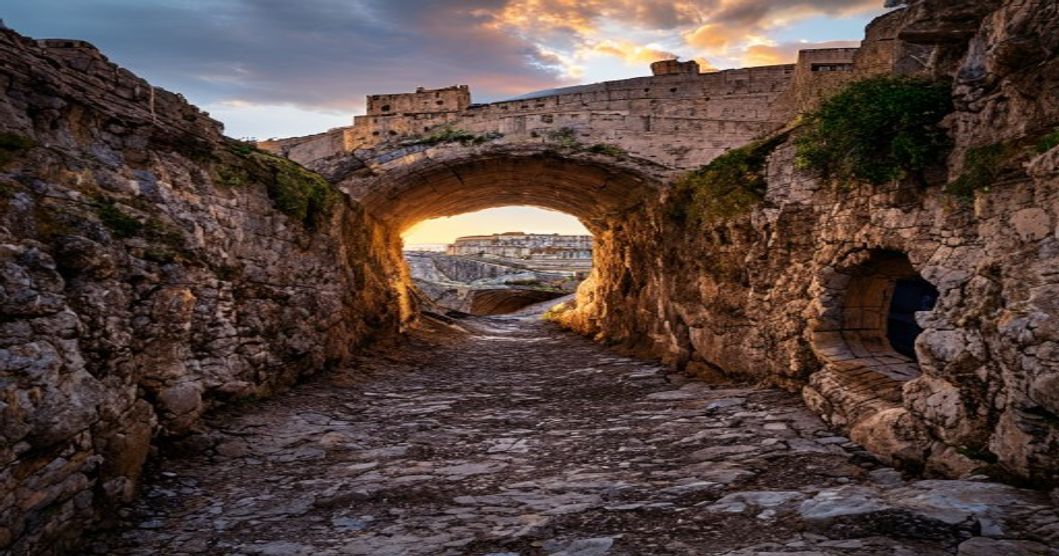
The result was a network of tunnels, gun emplacements, and galleries that became one of the engineering achievements of 18th century military history. Visitors today can walk through the main galleries, see the original cannon emplacements, and stand at the openings where guns once covered the isthmus.
The tunnelling began after a Sergeant Major named Ince suggested that it might be possible to blast a passage through the rock to reach a specific vantage point. The idea was approved and what started as a single tactical tunnel became a substantial underground network over the course of the siege. Ince was rewarded with land and a house.
The tunnels are not large by modern engineering standards but the context makes them remarkable. These were carved by hand and black powder in a few years while the Rock was actively under siege. The rock formations, the ventilation holes cut to clear gunpowder smoke, and the views through the gun ports over the isthmus are the highlights.
The World War II Tunnels: A City Under the Rock
When World War II began, Gibraltar's strategic importance was immediately clear. The Rock controlled the entrance to the Mediterranean and could not be allowed to fall. Between 1939 and 1945, the British military transformed the tunnel network into something extraordinary.
Over 34 miles (approximately 55 kilometres) of tunnels were excavated, enough to house the entire military garrison and a substantial civilian population. The underground complex included barracks, hospitals, a power station, water reservoirs, a bakery, telephone exchanges, and command centres.
| Feature | Details |
|---|---|
| Total tunnel length | 34 miles / 55 kilometres |
| Construction period | 1939 to 1945, accelerated 1940 to 1941 |
| Hospital capacity | Fully equipped surgical facilities underground |
| Water storage | Large reservoirs cut into the Rock |
| Command function | Eisenhower used the tunnels as HQ for the North Africa campaign launch |
General Eisenhower used the Gibraltar tunnels as headquarters when planning Operation Torch, the Allied landings in North Africa in 1942. This is not a minor footnote: decisions made underground in Gibraltar helped shape the course of the war in North Africa and subsequent operations in Italy and southern Europe.
Visiting Both Systems: Practical Information
Both tunnel systems are accessed through the Upper Rock Nature Reserve. Entry to the reserve costs between £12 and £18 for adults depending on whether you include additional attractions, and is paid at the main gate. The tunnels are included in the standard nature reserve entry.
The reserve is accessible on foot (steep) or by cable car (paid separately) or by taxi/tour bus. Most visitors combine a full day in the Upper Rock with the tunnels, the Barbary macaques, St Michael's Cave, and the views from the summit.
Both tunnel systems maintain a consistent temperature of around 18 to 20 degrees Celsius year-round. In summer this is a genuine relief. Bring a layer if you are sensitive to cool air, particularly if you are spending significant time inside.
Guided Tours vs Self-Guided
Self-guided entry with information boards is the standard experience. Guided tours are available and add considerably more context to both systems. The WWII tunnels in particular benefit from a guide: the sheer scale of the engineering and the operational history requires explanation to fully appreciate what you are looking at.
Gibraltar has licensed tourist guides who run Upper Rock tours including the tunnels. These can be booked through hotels or the Gibraltar Tourist Board. Prices vary but a full Upper Rock guided tour typically runs around £30 to £50 per person including entry fees.
The Bottom Line
The tunnels are one of the genuinely best things to do in Gibraltar, and consistently underrated compared to the cable car and monkey viewing that dominate tourist content. The Great Siege Tunnels are a remarkable piece of 18th century military engineering. The WWII tunnels are something else: 55 kilometres of underground infrastructure built in wartime, used for decisions that affected the outcome of the war. Both deserve more than a quick walk-through.
Frequently Asked Questions
Are the Great Siege Tunnels and WWII tunnels the same thing?
No. They are separate systems built centuries apart. The Great Siege Tunnels were carved in the 1780s during the siege by Spain and France. The WWII tunnels were built from 1939 to 1945 and are far more extensive, totalling 34 miles of underground passages.
How long does it take to visit the tunnels in Gibraltar?
Allow 45 to 90 minutes for the Great Siege Tunnels alone with self-guided exploration. The WWII tunnel section open to visitors takes 30 to 60 minutes. Most people combine both as part of a full Upper Rock day visit of 3 to 5 hours.
How much does it cost to visit Gibraltar's tunnels?
The tunnels are included in the Upper Rock Nature Reserve entry fee, which is approximately £12 to £18 for adults depending on the package. Guided tours cost extra, typically £30 to £50 per person all-in.
Did Eisenhower really use Gibraltar's tunnels as headquarters?
Yes. General Eisenhower established his command headquarters in Gibraltar's underground tunnels while planning Operation Torch, the Allied landings in North Africa in November 1942. The tunnel complex provided secure, bomb-proof command and communications facilities.
Are the tunnels accessible for people with mobility issues?
Partially. The tunnel floors are uneven in places and the access to the Upper Rock involves steep gradients regardless of route. The cable car avoids the climb but getting from the cable car terminus to the tunnel entrances involves some walking. Contact Gibraltar Tourism for current accessibility details before visiting.