
Gibraltar packs thousands of years of contested history into 6.7 km². The Gibraltar Museum, Great Siege Tunnels, WWII Tunnels, St Michael's Cave, Trafalgar Cemetery, and Europa Point are the headline sites. Most Upper Rock attractions are covered by one Nature Reserve ticket. Go before 10am to beat tour groups and catch clear views to Africa across the Strait.
Gibraltar is easy to underestimate. You see the Rock from a terrace in La Linea and think: monkeys, fish and chips, done. Spend a proper day here and you realise this place has been fought over, tunnelled through, besieged, and built on by pretty much every major civilisation that passed through the western Mediterranean. Phoenicians, Moors, Spanish, British: they all left something. This guide covers the best of what remains.
Quick Summary
- The Gibraltar Museum covers 3,000 years of history with original 14th-century Moorish Baths inside, free for residents
- The Great Siege Tunnels (work began 25 May 1782) and the WWII Tunnels are the highlight for most visitors
- St Michael's Cave has dramatic stalactite formations and has hosted live concerts since the 1950s
- Trafalgar Cemetery is small but quietly moving, free entry, often overlooked
- Europa Point gives you Africa on a clear day alongside the Ibrahim-al-Ibrahim Mosque
- The Gibraltar Cable Car is closed for reconstruction until around 2027; reach the Upper Rock by taxi, Rock Tour operator, or on foot via the Mediterranean Steps
- Morning is better for the Upper Rock: fewer crowds, clearer views before the haze builds
Gibraltar Museum: Start Here
Before you go anywhere else, go to the Gibraltar Museum on Bomb House Lane. It is one of the best small museums in southern Europe and most people walk straight past it because they are heading for the Rock.
The collection covers roughly 3,000 years of Gibraltar's history: Neanderthal skull fragments found in Forbes' Quarry, Phoenician artefacts, maps and prints from the various sieges, and military history from the Great Siege through to the Second World War. The museum also houses a dedicated exhibition on the Gorham's Cave Complex, which received UNESCO World Heritage status in 2016 for its Neanderthal occupation dating back approximately 32,000 years. Thorough, well presented, and genuinely interesting even if history is not normally your thing.
The standout feature is the Moorish Baths, preserved exactly where they were found during excavation inside the museum building. A 14th-century bathhouse from the Nasrid period, with original tilework and vaulted ceilings largely intact. You do not expect to turn a corner in a museum and find something that well preserved. It is worth the visit on its own.
Entry is free for Gibraltar residents and a small charge for tourists. Spend an hour here before you go up the Rock and everything you see up there makes more sense.
Moorish Castle: 14th Century and Still Standing
The Tower of Homage is the most visible surviving piece of Gibraltar's Islamic period. A square medieval tower halfway up the Rock, slightly orange-brown in colour, unmissable once you know what you are looking at.
The first castle on this site dates to 1160 AD. The current Tower of Homage was rebuilt in 1333 during Nasrid rule from Granada. It was the seat of the Moorish governors of Gibraltar before the Spanish took the Rock in 1462. You can view the tower from the road below at no cost. The tower itself is sometimes accessible depending on the season; check locally for current opening times.
The Great Siege Tunnels and WWII Tunnels: The Highlight Nobody Skips Twice
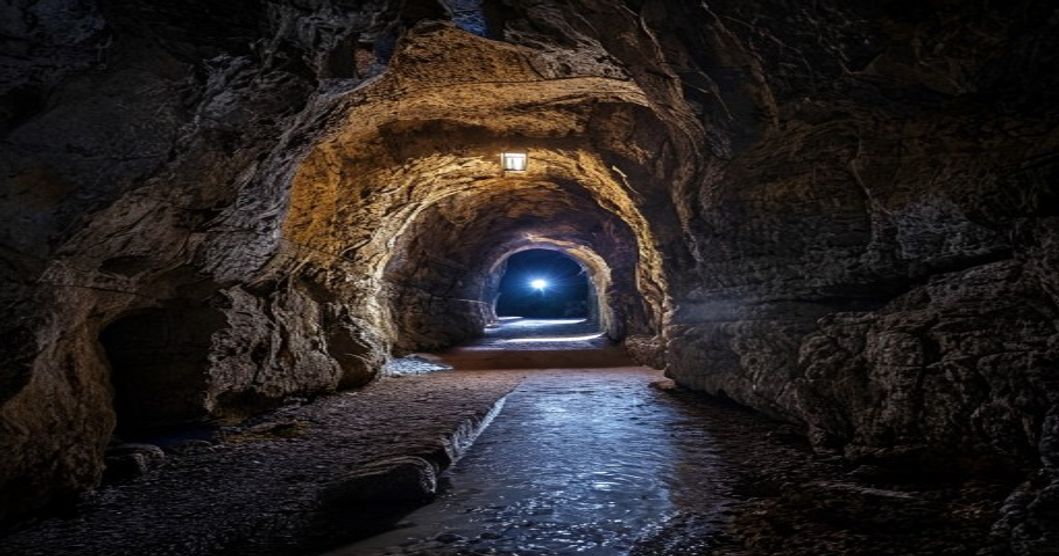
The Great Siege Tunnels are what most people do not expect. You walk through the actual Rock: the air is cold, slightly claustrophobic, and genuinely brilliant. Do not skip them to save time.
The Great Siege Tunnels were blasted and chiselled into the northern face of the Rock during the Great Siege of Gibraltar (1779 to 1783), when British and Hanoverian troops were besieged by Spanish and French forces for over three years. Work began on 25 May 1782 under Sergeant Major Henry Ince. The tunnels gave the garrison a way to mount artillery on the Rock face that would otherwise have been inaccessible. Around 300 metres of original tunnel survive.
The WWII Tunnels are a different scale entirely. Around 55 kilometres of tunnels were dug into the Rock between 1939 and 1945, creating an underground city capable of housing 16,000 troops with supplies for a sixteen-month siege. The tunnels held hospitals, bakeries, a power station, ammunition stores, and operation rooms. General Eisenhower used them as headquarters for Operation Torch in 1942.
Temperature inside stays around 16 degrees year-round. Bring a light layer even in summer. Guided tours are available and add real context.
Both tunnel systems are included in the Upper Rock Nature Reserve ticket. Do the tunnels first, then St Michael's Cave. By that point you have had the full underground Gibraltar experience.
St Michael's Cave: Underground Gibraltar
St Michael's Cave is a natural cavern system deep inside the Upper Rock, around 300 metres above sea level. The main chamber is enormous: high ceilings, dramatic stalactite and stalagmite formations, and coloured lighting that either adds atmosphere or feels slightly theme park depending on your taste. The formations themselves are genuinely impressive regardless.
The cave has been known about for centuries. During the Second World War it was earmarked as a potential hospital in the event of a major attack. Today the main auditorium chamber hosts concerts and events and has been used as a live venue since the 1950s. The acoustics are remarkable and it holds a few hundred people. If there is an event on during your visit, it is worth attending.
Going early in the morning means you often have it nearly to yourself before the tour groups arrive.
Trafalgar Cemetery: Quiet and Worth Ten Minutes
Most people drive straight past the Trafalgar Cemetery. It sits just south of the Southport Gates, a small walled cemetery shaded by trees, free to enter.
The cemetery contains the graves of British sailors and officers who died of their wounds in Gibraltar in the days after the Battle of Trafalgar in October 1805. Nelson himself was taken back to England. The headstones are weathered but readable. It is sobering in the best way.
It will not take you more than fifteen minutes, but it is one of those spots that stays with you.
Europa Point: Views to Africa
Europa Point is the southernmost tip of Gibraltar, a flat promontory looking out across the Strait towards Morocco. On a clear morning you can see the Rif Mountains of northern Africa: the Strait is around 13 kilometres at its narrowest point. By afternoon the haze often builds, which is one more reason to go early.
At Europa Point you will find the Trinity Lighthouse, operational since 1841 and the only Trinity House lighthouse outside the British Isles. The Ibrahim-al-Ibrahim Mosque stands right at the point: a large modern mosque with white marble and blue tilework, inaugurated on 8 August 1997 as a gift from King Fahd of Saudi Arabia. It is the southernmost mosque in continental Europe and one of the largest mosques in a non-Muslim country. Non-Muslim visitors are sometimes able to visit outside prayer times.
There is a cafe at Europa Point and open space to sit and take in the views. It is a genuinely nice spot, often less crowded than the Upper Rock.
Casemates Square: Where the Fortifications Became a Plaza
Casemates Square is not a museum, but it is a heritage site in its own right. The square was originally a series of military casemates: artillery positions built into the northern fortifications. It was converted into a public pedestrian square and is now Gibraltar's social hub, with restaurants and cafes lining the edges. The old gun emplacements are still visible if you look for them.
Most walking tours of Gibraltar start or end here. The gates of the square still carry the original fortification architecture.
Jewish Heritage: An Overlooked Part of Gibraltar's Story
Gibraltar has one of the oldest and most continuous Sephardic Jewish communities in the world. The community traces its roots to Jews who moved to Gibraltar following the British capture in 1704, and to the Sephardic tradition present in the region since the expulsion from Spain in 1492.
Several historic synagogues are still in active use in Gibraltar. Some are occasionally open to visitors outside of service times; check locally on arrival as arrangements vary. The community's presence is visible throughout the old town and Main Street in architecture, family names, and the cultural calendar.
In the south of Gibraltar there is an ancient Jewish cemetery containing graves from several centuries, one of the oldest in Gibraltar and a quiet record of the community's long continuity here.
Upper Rock Nature Reserve: Practical Information
| Attraction | Included in Reserve Ticket? | Notes |
|---|---|---|
| Great Siege Tunnels | Yes | 18th-century military engineering, begun 25 May 1782 |
| WWII Tunnels | Yes | 55km wartime underground city, Eisenhower's Operation Torch HQ |
| St Michael's Cave | Yes | Stalactite formations, live events venue since the 1950s |
| Apes' Den | Yes | Barbary macaques, c.230 to 300 individuals |
| Gibraltar Museum | No (separate) | Free for residents, small charge for tourists |
| Trafalgar Cemetery | No | Always free |
| Europa Point | No | Free outdoor area |
Adult ticket pricing for the Upper Rock Nature Reserve: public listings indicate a range of around GBP 18 to GBP 21 depending on what is included. Check the Gibraltar Tourism website for current prices before visiting, as these are updated periodically.
Getting to the Upper Rock in 2026
The Gibraltar Cable Car has been closed for full reconstruction since November 2025, with a reopening expected around 2027. Do not plan your visit around it. The practical alternatives are a taxi, one of the official Rock Tour operators who cover the Upper Rock sites by vehicle, or on foot via the Mediterranean Steps from Jews' Gate up to O'Hara's Battery at 420 metres. The Steps are a proper hike: allow 1.5 to 2 hours and wear appropriate footwear.
Morning is better. Before 10am the Upper Rock is noticeably quieter, the views to Africa are clearer before the Strait haze develops, and the caves and tunnels are less crowded. By midday in summer the main attractions can get very busy with cruise ship visitors.
The Bottom Line
Gibraltar's heritage is disproportionate to its size. In a single day you can walk through 14th-century Moorish baths, stand in tunnels blasted by soldiers under siege in 1782, and look at graves from the Battle of Trafalgar. Not many places that fit into 6.7 km² offer that range.
Start with the Gibraltar Museum to get context, go up the Rock for the tunnels and caves, and finish at Europa Point with a coffee and a view of Africa. The Trafalgar Cemetery and the Jewish heritage sites are worth adding if you have extra time. You will not run out of things that genuinely mean something.
Frequently Asked Questions
How long does it take to visit the main Gibraltar heritage sites?
A full day covers the Gibraltar Museum, the Upper Rock attractions (Great Siege Tunnels, WWII Tunnels, St Michael's Cave), Trafalgar Cemetery, and Europa Point. Spread it across two days if you want to take your time and include the old town.
Is the Upper Rock Nature Reserve worth the entry fee?
Yes. The combined ticket covers the Great Siege Tunnels, the WWII Tunnels, and St Michael's Cave, all genuinely impressive. The WWII Tunnels alone, 55 kilometres of wartime underground city with Eisenhower's Operation Torch headquarters, justify the price for most visitors.
What is the best time of day to visit the Upper Rock?
Morning, ideally before 10am. The crowds are thinner, the views to Africa are clearer before the Strait haze builds, and the caves feel more atmospheric when they are not packed with tour groups.
Is the Gibraltar Cable Car running in 2026?
No. The cable car has been closed for full reconstruction since November 2025, with a reopening expected around 2027. Reach the Upper Rock by taxi, Rock Tour operator, or on foot via the Mediterranean Steps from Jews' Gate.
Is the Gibraltar Museum free?
Free for Gibraltar residents, small admission charge for tourists. The Moorish Baths inside, a 14th-century bathhouse preserved intact within the museum building, are alone worth the visit.
Can you visit Gibraltar's synagogues as a tourist?
Some of Gibraltar's historic synagogues are occasionally open to visitors outside of service times. Check locally on arrival as access arrangements vary. The Jewish heritage of Gibraltar is a genuinely interesting and often overlooked part of the territory's story.