Last updated: April 2026
Quick Summary
- Gibraltar has real limestone climbing on the Upper Rock's south and east faces
- Via ferrata routes offer accessible adventure for beginners and intermediates
- Guided climbing experiences cost approximately £40-£80 per person at the time of writing
- Best season: spring (March-May) and autumn (September-November)
- Intermediate climbers will find the Rock genuinely rewarding
- Booking through Gibraltar tourism or local guides is the safest approach
Gibraltar's Upper Rock is 426 metres of Jurassic limestone rising straight from the Mediterranean. The views from the top are famous. The wildlife reserve is famous. What is not famous, but probably should be, is the quality of the climbing.
The south and east faces of the Rock offer genuine limestone routes, and via ferrata tracks have opened up the experience to a wider range of visitors. If you want to do something genuinely different on a Gibraltar trip, climbing the Rock — rather than just taking the cable car — is worth knowing about.
What Is the Climbing Actually Like?
The Rock's limestone is Jurassic in origin and offers the kind of technical, featured climbing that limestone is prized for globally. The upper faces — particularly the south and east sides — have routes that range from single-pitch beginner climbs to more sustained technical lines that will keep experienced climbers honest.
This is not a climbing destination with hundreds of documented routes like the Limestone massifs of Spain's interior or the Dolomites. It is niche, and that is part of the appeal. You are climbing on a specific, historically significant piece of rock with the Strait of Gibraltar spread out below you. That experience is unique.
Gibraltar climbing is not about volume. It is about the quality of the experience on a specific, remarkable piece of limestone. Intermediate climbers with experience on technical routes will find the Rock genuinely rewarding. Beginners with a guide can access the via ferrata routes with no prior climbing experience.
Via Ferrata on the Upper Rock
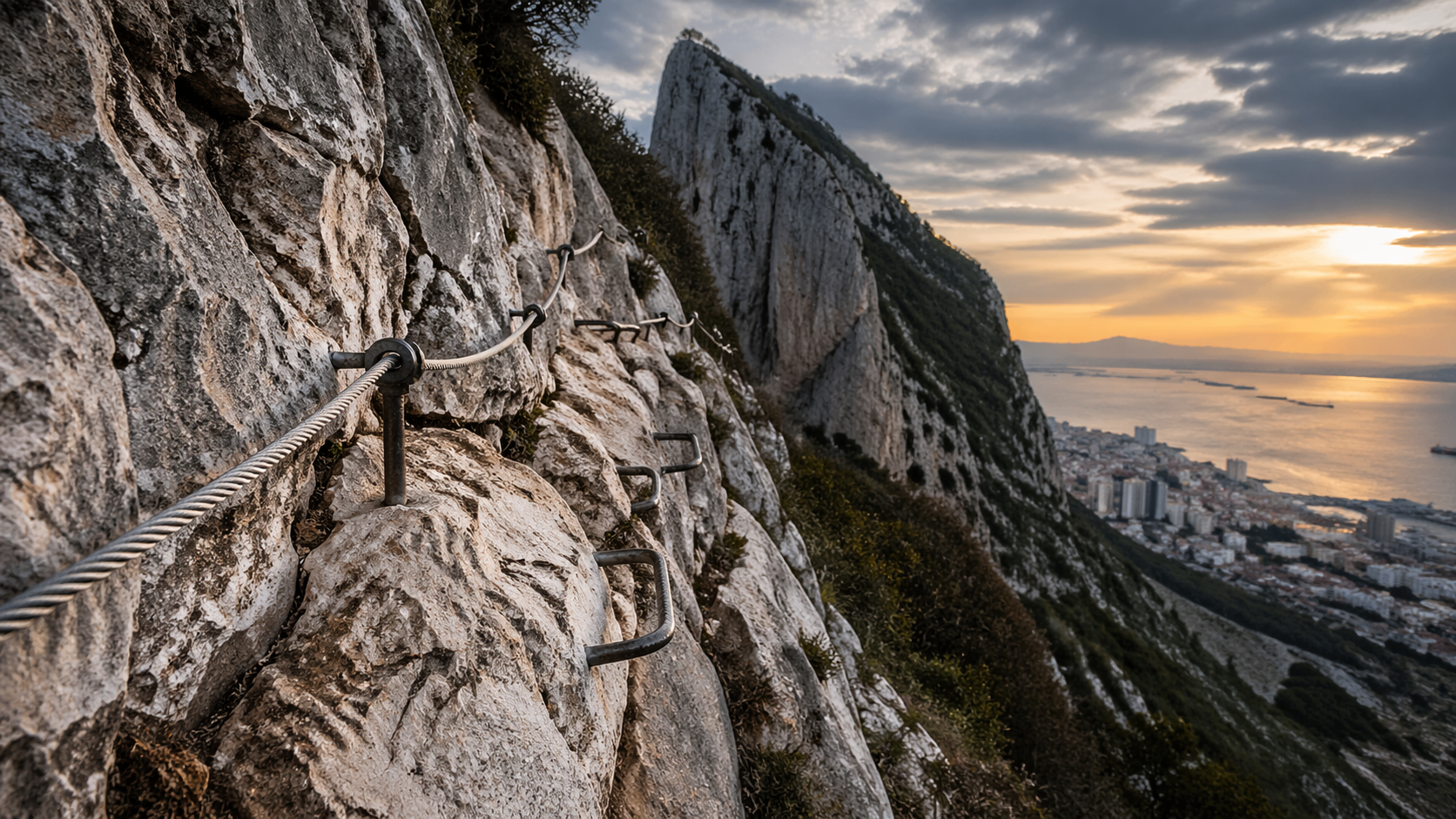
Via ferrata (Italian for "iron road") routes use fixed cables, ladders, rungs and anchors bolted into the rock face to make climbing accessible to people without technical rock climbing skills. They bridge the gap between hiking and climbing — more adventurous than a walk, safer than free climbing, and genuinely exciting.
Gibraltar's via ferrata routes are set on the Upper Rock sections accessible from the Nature Reserve. They give access to parts of the Rock face that walkers cannot reach, and the exposure (the feeling of height and open air around you) is significant. Standing on an iron rung with the Strait of Gibraltar 200 metres below is a memorable experience.
Via ferrata requires no prior climbing experience, but you should be comfortable with heights. A guide is strongly recommended for first-timers — both for safety and to make sure you find the correct routes in what is a complex reserve environment.
Route Difficulty Overview
| Activity | Difficulty | Experience needed | Approx. duration |
|---|---|---|---|
| Via ferrata (beginner section) | Easy-Moderate | None, must be comfortable with heights | 1.5 - 2.5 hours |
| Via ferrata (full route) | Moderate | None, good fitness required | 3 - 4 hours |
| Guided rock climbing (intro) | Easy-Moderate | No prior experience required | 2 - 3 hours |
| Technical limestone routes | Intermediate-Hard | Outdoor climbing experience required | Half or full day |
What Does It Cost?
Guided climbing and via ferrata experiences in Gibraltar typically run from approximately £40 to £80 per person at the time of writing. Pricing varies by operator, group size, route difficulty and duration.
Group sessions at the lower end of the price range are the most common entry point. Private guiding for two people, or technical climbing sessions for experienced climbers wanting a guide with local knowledge, sits toward the upper end of the range or above it.
- Group via ferrata experience: Approximately £40-£55 per person
- Private/small group guided climbing: Approximately £60-£80+ per person
- Equipment hire (harness, helmet, gloves): Usually included in guided experiences; confirm when booking
The Nature Reserve entrance fee is also required on top of guide fees unless your operator includes it in the package. At the time of writing, adult entry to the Upper Rock Nature Reserve costs approximately £15-£20 (confirm current prices when booking as these are subject to change).
What to Bring
For any climbing or via ferrata activity on the Rock, preparation matters. The conditions can change, the terrain is uneven, and being properly equipped makes a significant difference to the experience.
- Footwear: Solid, closed-toe shoes with a grippy sole. Hiking boots or trail runners are ideal. Trainers work for via ferrata. Sandals and flip-flops are not suitable.
- Clothing: Comfortable, non-restrictive layers. Even in summer, the upper parts of the Rock can be breezy. A light wind layer is worth packing.
- Water: Carry at least 1 litre per person. There are no water points on the climbing routes and dehydration on a warm day can sneak up on you.
- Sun protection: The Rock faces are exposed. Sunscreen and a hat matter, particularly from May through September.
- Gloves: For via ferrata, the fixed cables can be rough on hands. Most guide operators provide gloves as part of the equipment, but check.
- Small pack: A lightweight daypack for water, layers, sunscreen and any personal items. Keep it light — you're carrying it up the face.
Best Time of Year to Climb
The best conditions for climbing on the Rock are in spring and autumn. March through May and September through November offer comfortable temperatures, less wind than winter and no summer heat extremes.
Summer (June-August) is possible but can be uncomfortably hot on exposed south and east faces. Early morning starts help significantly in summer. Winter (December-February) is mild compared to northern Europe but can be wet and windy, and the Rock is known for its dramatic cloud formations (the "Levanter cloud") which affect conditions unpredictably.
Gibraltar's famous Levanter — an easterly wind — is a real factor for upper Rock activities. It can shift conditions quickly, particularly on the east face. A local guide with knowledge of current conditions is valuable for this reason beyond just route-finding. Always check conditions before heading up.
How to Book Climbing in Gibraltar
The safest and most straightforward way to book is through Gibraltar's official tourism channels or via established local guide operators. The Gibraltar Tourism Board can direct you to accredited guides and operators who are permitted to run activities in the Nature Reserve.
- Gibraltar Tourism Board: visitgibraltar.gi is the official portal. Contact them for a current list of accredited guide operators for climbing and via ferrata.
- Local guide operators: A small number of specialist guides operate on the Rock. Searching for "Gibraltar via ferrata guide" or "Gibraltar rock climbing" will surface current operators.
- Book in advance: Gibraltar climbing is a niche activity with a small number of operators. Weekend slots and peak season dates fill up. Book ahead rather than trying to arrange on arrival.
Safety Notes
The Upper Rock Nature Reserve is a managed environment but it is also a real mountain environment. The drop-offs on the east and south faces are serious. Via ferrata equipment (harness, helmet, via ferrata lanyard) is non-negotiable on any fixed-route activity.
Stick to marked routes and go with a guide if you do not have prior climbing experience. The Nature Reserve has wardens, but help is not immediately available on remote sections of the face.
Mobile reception is variable on the upper Rock. Tell someone your plans before you head up. Carrying a charged phone matters for emergencies even if signal is unreliable.
Is Gibraltar Worth It for Climbers?
Honestly, it depends on what you're after. If you're an experienced climber looking for a high-volume destination with 200 documented routes, you will find more options in the limestone crags of the Spanish interior or on the Costa Blanca.
But if you want a climbing experience that is unique, visually spectacular, historically resonant and genuinely good on a technical level — Gibraltar delivers that. The intermediate climber who has done sport climbing at local crags and wants something more memorable will find the Rock a proper experience.
For non-climbers who want an adventurous day out, via ferrata is one of the best things to do in Gibraltar, full stop. It is more engaging than a cable car ride, gives you access to parts of the Rock most visitors never see, and leaves you with a story worth telling.
Do I need climbing experience to do via ferrata in Gibraltar?
No. Via ferrata is designed to be accessible without prior rock climbing experience. You must be comfortable with heights and reasonably fit. A guide is strongly recommended for first-timers to ensure safety and navigate the reserve correctly.
Is climbing equipment provided or do I need to bring my own?
Most guided experiences include equipment hire — harness, helmet and via ferrata lanyard for via ferrata routes, and climbing shoes plus belay equipment for rock climbing sessions. Confirm what is included when you book. Footwear suitable for the terrain is usually your own responsibility.
Can children do via ferrata on the Rock?
Some operators offer junior or family via ferrata experiences with minimum age requirements (typically 10-12 years at the time of writing, but varies by operator). Check with your specific operator before booking a family trip. Children must be comfortable with heights and physically capable of the route.
What is the Levanter and does it affect climbing?
The Levanter is an easterly wind that frequently builds over Gibraltar, often producing the famous cloud that spills over the Rock's top. On the east and south faces, the Levanter can create uncomfortable conditions with wind chill and gusts. Local guides monitor conditions and will advise on whether a given day is suitable. It's one of the key reasons to go with a local guide rather than heading up independently.
How do I book via ferrata or climbing in Gibraltar?
Contact Gibraltar Tourism at visitgibraltar.gi for a list of current accredited operators. You can also search directly for local guide operators. Book in advance, especially for weekends and peak season. Turning up and hoping to arrange it on the day is not reliable for a small niche market like this.